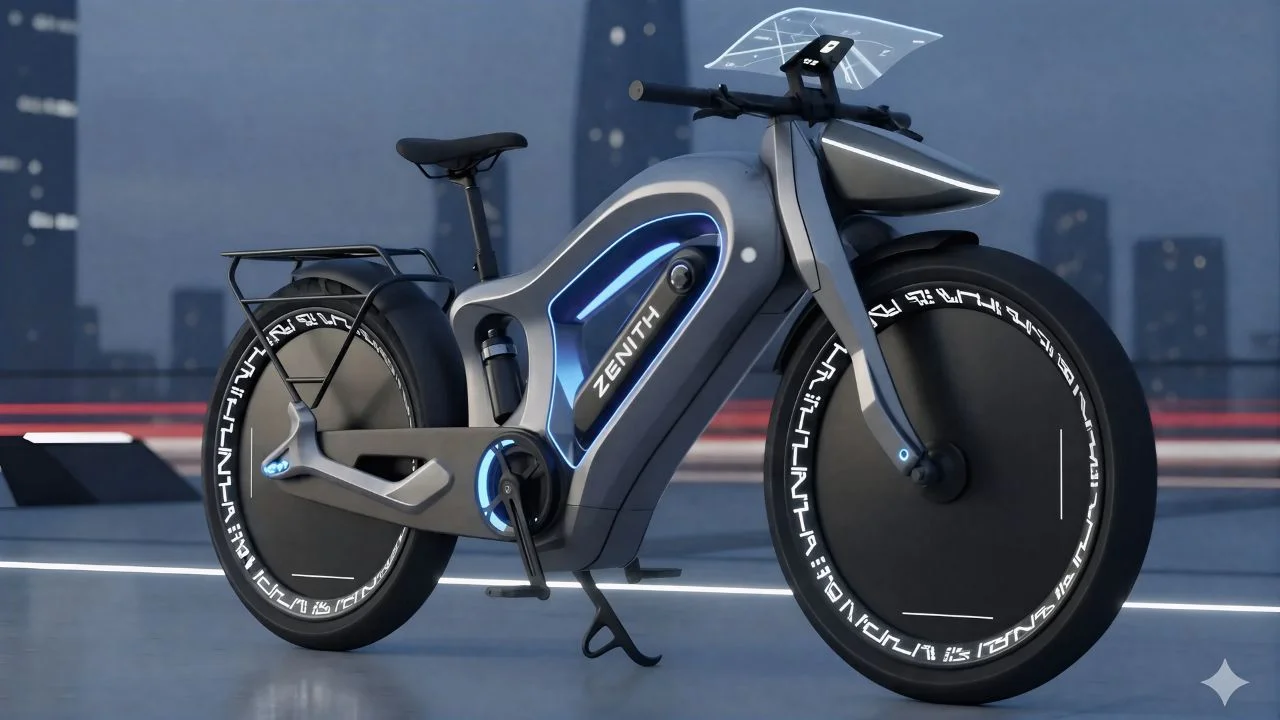
TVS Electric Cycle Electric mobility in India is moving beyond scooters and motorcycles, and that has naturally created excitement around the possibility of a TVS electric cycle. A recent online claim suggests that TVS could launch an electric cycle in 2026 with a huge 80 km range, smart connectivity and advanced features.
But there is an important point buyers should know before believing the headline: TVS Motor has not officially confirmed a 80 km-range electric cycle launch at this time. The company’s current electric portfolio is focused on products such as the iQube, TVS X and Orbiter, while its official 2026 announcements have also centered on expanding its existing EV range.
So, what could a future TVS electric cycle look like, and how realistic is a 340 km range?
Is TVS Really Launching an Electric Cycle in 2026?
At present, there is no official TVS announcement confirming a production electric cycle with a 80 km claimed range.
TVS has been steadily expanding its electric mobility business. The company currently sells multiple electric scooters, including the iQube family, while the TVS X sits higher in the portfolio with a technology-focused approach. The TVS X, for example, gets connected technology, a large TFT display, navigation, ride modes and safety features such as theft and crash alerts.
That makes a future electric cycle from the brand technically interesting, but the 340 km figure should currently be treated as an unconfirmed claim rather than an official specification.
80KM Range: Can It Really Happen?
A claimed range of 340 km on a single charge would be extremely high for an electric bicycle.
For comparison, TVS’ current electric scooter portfolio offers considerably lower certified ranges. The iQube S 4.7 kWh has an IDC range of up to 175 km, while the larger iQube ST 5.3 kWh is positioned as the long-range scooter in the family.
An electric cycle is lighter than a scooter, so it can achieve impressive efficiency. However, reaching 340 km would depend heavily on:
- Battery capacity
- Rider weight
- Average speed
- Riding mode
- Terrain
- Tyre pressure
- Temperature
- Use of pedal assistance
- Wind conditions
If TVS eventually develops such a product, the 340 km figure could potentially refer to a specific test condition or an assistance-based riding cycle rather than everyday real-world riding.
Expected Design and Features
If TVS enters the electric-cycle segment, practicality will probably be more important than outright performance.
A future model could use a lightweight frame with an integrated battery, LED lighting and a comfortable upright riding position. The battery could potentially be removable, making home charging easier for customers living in apartments.
The cycle could also feature larger tyres designed for Indian roads, front and rear suspension and disc brakes on higher variants.
However, these are expectations rather than confirmed specifications because TVS has not announced the production model.
Smart Connectivity Could Be a Major Attraction
Connectivity is one area where TVS already has considerable experience.
The company’s existing electric vehicles offer features such as smartphone connectivity, navigation, remote vehicle information, OTA updates, theft alerts and other connected functions. The TVS X goes even further with a 10.2-inch panoramic TFT display, EV-specific navigation and smartphone/smartwatch connectivity.
A future TVS electric cycle could therefore potentially offer:
| Expected Feature | Possible Function |
|---|---|
| Smartphone App | Battery and ride information |
| GPS | Navigation and location tracking |
| Bluetooth | Phone connectivity |
| Anti-Theft Alert | Security notification |
| Ride Statistics | Distance, speed and efficiency |
| OTA Updates | Software improvements |
| Geo-Fencing | Location-based security |
| USB Charging | Smartphone charging |
Again, these features should be considered possible features, not confirmed specifications.
Battery and Charging
Battery technology would be the biggest factor in determining whether a 340 km claim is realistic.
A high-capacity lithium-ion battery could provide more usable energy, but increasing battery size also adds weight. For an electric cycle, keeping the overall weight low is important because riders may need to pedal the vehicle when the battery is depleted.
A practical TVS electric cycle could therefore use a balance between battery capacity and weight rather than simply installing the largest possible battery.
Fast charging could also become useful. A rider would ideally want enough energy for several hours of use without having to leave the cycle plugged in overnight.
What Could Be the Price?
There is currently no official price for a TVS electric cycle because the company has not confirmed such a product.
If TVS eventually launches an electric bicycle, the price would depend on the battery size, motor output, frame construction, connectivity package and braking hardware.
A basic commuter version could target affordability, while a premium connected version could sit considerably higher in the market.
TVS Electric Cycle vs Electric Scooter
The biggest advantage of an electric cycle would be its lightweight and simple design.
For short-distance commuting, an electric cycle could be easier to handle than a scooter and potentially cheaper to operate. It could also appeal to customers looking for an environmentally friendly alternative for daily trips.
However, electric scooters remain more practical for many Indian buyers because they provide better weather protection, storage space, stronger performance and easier carrying capacity.
TVS itself has demonstrated this practical approach with the Orbiter, which offers features such as a 158 km IDC range, 34-litre storage, cruise control, hill-hold assist and connected safety technology.
Should You Wait for the 340KM TVS Electric Cycle?
If you are considering buying an electric vehicle, it would be better not to make a purchase decision based only on the 340 km TVS electric-cycle claim.
There is currently no official TVS specification confirming a 340 km range, launch date or price. Until TVS releases an official announcement, product page or press release, these details should be treated as speculation.
The interesting part is that TVS already has a strong electric-vehicle technology base. Its current products show that the company is investing heavily in connected features, software, charging technology and practical electric mobility.
Final Verdict
The idea of a 2026 TVS electric cycle with a 340 km range and smart connectivity sounds exciting, but the headline currently goes beyond what TVS has officially confirmed.
For now, there is no confirmed 340 km TVS electric cycle launch, official price or final specifications. If such a product is introduced, battery efficiency, lightweight construction, connected technology and real-world range will be the most important factors to watch.
For buyers, the best approach is simple: wait for an official TVS announcement before treating the 340 km range or other specifications as final.
1. Is TVS launching an electric cycle in 2026?
TVS has not officially confirmed a 2026 electric cycle with a 340 km range. Its current electric portfolio includes models such as the iQube, TVS X and Orbiter.
2. Is the 340 km range officially confirmed?
No. There is currently no official TVS source confirming a 340 km range for an electric cycle.
3. What smart features could a future TVS electric cycle get?
If launched, it could potentially feature smartphone connectivity, GPS, ride statistics, anti-theft alerts, navigation and OTA updates, based on technologies already used across TVS electric vehicles.
4. What will be the price of the TVS electric cycle?
The price has not been announced because TVS has not officially confirmed this electric-cycle model.